The Impact of Blockchain on Global Banking in 2026
In 2026, blockchain technology has moved far beyond its early association with cryptocurrencies and is now playing a transformative role in global banking. Financial institutions across the world are exploring and implementing blockchain solutions to improve transparency, reduce costs, enhance security, and speed up financial transactions. As digital transformation accelerates, blockchain is becoming a foundational technology for the future of banking.
Understanding Blockchain Technology
Blockchain is a decentralized digital ledger that records transactions across multiple computers in a secure and transparent way. Each transaction is grouped into a block and linked to the previous one, creating a chain of records that cannot easily be altered. This structure ensures high levels of security, traceability, and data integrity.
For banks and financial institutions, blockchain provides a powerful alternative to traditional systems that rely heavily on centralized databases and intermediaries. By using distributed ledger technology, banks can streamline operations and minimize the risks associated with fraud or data manipulation.
Faster and Cheaper Cross-Border Payments
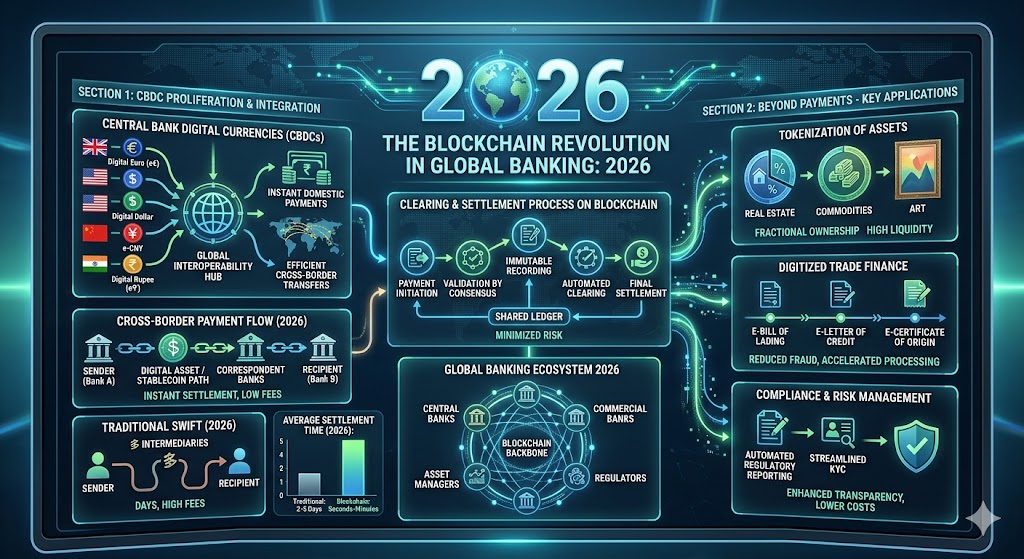
One of the most significant impacts of blockchain on global banking is in cross-border payments. Traditionally, international money transfers can take several days to process and involve multiple intermediaries, each charging transaction fees. Blockchain-based payment systems allow transactions to be completed within minutes while reducing processing costs.
This improvement benefits not only large financial institutions but also individuals and small businesses that depend on affordable international transactions. Faster settlements improve liquidity and enable banks to operate more efficiently in global markets.
Enhancing Transparency and Security
Transparency is another major advantage of blockchain in banking. Every transaction recorded on a blockchain network can be verified by participants, creating a secure and auditable system. This level of transparency reduces the chances of fraud and enhances trust between financial institutions, regulators, and customers.
Blockchain also strengthens cybersecurity in banking systems. Because the ledger is distributed across multiple nodes, it becomes extremely difficult for hackers to alter records or compromise the entire system. This decentralized architecture provides an additional layer of protection against financial crimes.
Smart Contracts and Automated Banking Processes
Blockchain also enables the use of smart contracts, which are self-executing agreements coded into the blockchain. These contracts automatically execute transactions when predefined conditions are met.
In banking, smart contracts can simplify processes such as loan approvals, insurance claims, trade finance agreements, and compliance checks. By automating these tasks, banks can reduce administrative costs, eliminate delays, and improve operational efficiency.
Improving Regulatory Compliance
Financial institutions operate under strict regulatory frameworks that require detailed reporting and monitoring. Blockchain technology helps banks maintain accurate and transparent transaction records that regulators can easily audit.
This capability improves compliance with financial regulations and reduces the time and cost associated with manual reporting processes. Regulators in many countries are also exploring blockchain-based systems for monitoring financial activities in real time.
Challenges Facing Blockchain Adoption
Despite its advantages, blockchain adoption in banking still faces several challenges. Scalability issues, integration with legacy banking systems, and regulatory uncertainties remain significant barriers. Banks must also invest in technical expertise and infrastructure to implement blockchain solutions effectively.
Additionally, concerns about data privacy and governance within blockchain networks continue to be discussed by policymakers and industry leaders.
The Future of Blockchain in Global Banking
By 2026, blockchain is no longer viewed as an experimental technology but as a strategic innovation shaping the future of financial services. Central banks are researching digital currencies, while commercial banks are investing in blockchain platforms for payments, identity verification, and asset management.
As technology evolves and regulatory frameworks mature, blockchain is expected to become a core component of modern banking infrastructure.
Conclusion
Blockchain technology is redefining the global banking landscape by making financial systems more secure, transparent, and efficient. From faster cross-border payments to automated smart contracts and improved regulatory compliance, blockchain offers powerful solutions to long-standing challenges in the financial industry.
As banks continue to embrace digital innovation, blockchain will play an increasingly important role in building a more connected, reliable, and inclusive global financial system. 🌍💻📊