How FinTech is Reshaping the Global Financial System
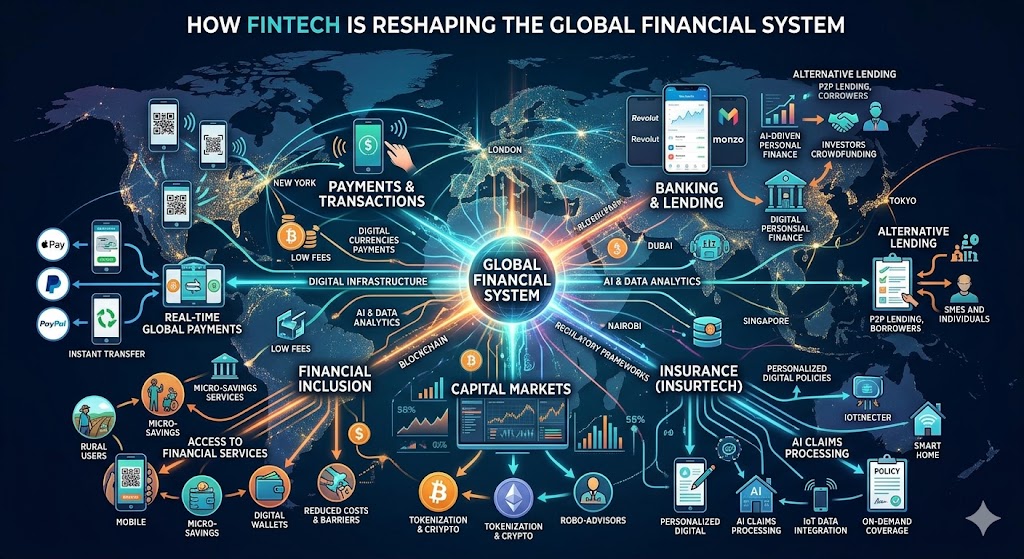
Financial Technology—commonly known as FinTech—has become one of the most powerful forces transforming the global financial system. By combining advanced digital technologies with traditional financial services, FinTech is redefining how individuals, businesses, and governments access, manage, and invest money. From mobile banking and digital payments to blockchain and artificial intelligence, the FinTech revolution is making financial services faster, more accessible, and more efficient than ever before.
The Rise of FinTech in the Digital Economy
Over the past decade, the rapid growth of internet access, smartphones, and cloud computing has created the perfect environment for FinTech innovation. Traditional banking systems often relied on complex processes, physical branches, and lengthy approval procedures. FinTech companies have disrupted this model by offering digital-first solutions that allow users to transfer money, apply for loans, invest in stocks, and manage their finances directly from mobile apps or online platforms.
Digital payment platforms, peer-to-peer lending services, and robo-advisors are just a few examples of FinTech products that are reshaping financial services. These technologies reduce operational costs, increase efficiency, and deliver a more personalized experience for users.
Expanding Financial Inclusion Worldwide
One of the most significant impacts of FinTech is its ability to expand financial inclusion. In many developing regions, millions of people lack access to traditional banking services due to geographic, economic, or regulatory barriers. FinTech solutions such as mobile wallets and digital banking platforms enable people to store money, send payments, and access credit without needing a physical bank account.
This transformation is particularly important for small businesses and entrepreneurs. With easier access to digital financial tools, startups and small enterprises can secure funding, manage transactions, and participate in the global economy more effectively.
Artificial Intelligence and Data-Driven Finance
Artificial intelligence (AI) and big data analytics are also playing a crucial role in the evolution of financial technology. Financial institutions now use AI to analyze large volumes of data, detect fraud, evaluate credit risk, and provide personalized financial advice.
Algorithmic trading platforms and robo-advisors use sophisticated models to optimize investment portfolios and automate trading decisions. These technologies allow investors to make more informed choices while reducing emotional bias and human error.
Blockchain and the Emergence of Decentralized Finance
Another groundbreaking development in FinTech is blockchain technology. Blockchain enables secure, transparent, and decentralized record-keeping systems that eliminate the need for traditional intermediaries. This innovation has given rise to cryptocurrencies and decentralized finance (DeFi) platforms, which allow users to conduct financial transactions without relying on banks or centralized institutions.
Blockchain technology has the potential to improve cross-border payments, reduce transaction costs, and increase transparency in financial operations. Governments and financial organizations worldwide are exploring blockchain applications to enhance security and efficiency in the financial system.
Challenges and Regulatory Considerations
Despite its many benefits, FinTech also introduces new challenges. Cybersecurity threats, data privacy concerns, and regulatory uncertainty remain major issues for financial institutions and technology companies. As digital financial services continue to expand, regulators must develop frameworks that protect consumers while encouraging innovation.
Balancing innovation with regulation is essential to ensure that FinTech technologies operate safely and sustainably within the global financial ecosystem.
The Future of FinTech
Looking ahead, FinTech is expected to continue reshaping the financial landscape through advancements in artificial intelligence, digital currencies, open banking, and embedded finance. As technology evolves, financial services will become increasingly automated, personalized, and accessible to people around the world.
The integration of technology into finance is not just a temporary trend—it represents a fundamental transformation of the global financial system. Institutions that embrace innovation will be better positioned to thrive in the digital economy, while those that resist change may struggle to remain competitive.
Conclusion
FinTech is redefining how financial services are delivered, consumed, and regulated. By leveraging cutting-edge technologies, FinTech companies are improving efficiency, expanding financial inclusion, and creating new opportunities for investors and businesses. As the digital economy continues to grow, the influence of FinTech will only become stronger, shaping the future of global finance for decades to come. 📊💻