Elon Musk 2026 Starship Mars Mission: Everything We Know So Far
For decades, humankind has looked at Damages with rise to parts interest and yearning. Incalculable space offices have envisioned sending people there, numerous researchers have sketched out what colonizing the Ruddy Planet might see like, and futurists have built whole careers around the address: When will we really go?
But few individuals have turned that address into a ticking commencement clock the way Elon Musk has. His company, SpaceX, has been straightforwardly planning its vehicles, motors, and flight frameworks with one objective in mind—enabling human life on Defaces. And agreeing to Musk, the another gigantic step on that travel is closing in: a Starship mission to Defaces focused on for the conclusion of 2026.
While the mission will likely be unmanned, it speaks to distant more than fair another test flight. SpaceX’s arranged 2026 Damages dispatch is forming up to be a noteworthy breakthrough in human space exploration—one that seem rethink what’s conceivable for private aviation and humanity’s interplanetary future.
Here’s everything we know so distant approximately Elon Musk’s yearning 2026 Damages mission—including the shuttle, the timeline, the part of Tesla’s Optimus robot, and the long-term Defaces colonization guide behind it.
Why 2026 Matters: Musk’s Countdown to Mars
Elon Musk has never been bashful around naming timelines that sound borderline incomprehensible to most individuals. But timelines, reasonable or not, play an imperative mental part for Musk and SpaceX: they drive innovation.
The year 2026 has come up more than once in Musk’s interviews, talks, and open discourses. He has portrayed it as the most punctual practical window for a Damages mission utilizing Starship. This adjusts with:
- The Earth–Mars synodic cycle, which makes favorable dispatch windows each 26 months
- The anticipated development of Starship hardware
- Progress on the Raptor engine
- NASA associations supporting lunar and deep-space systems
- The pace of SpaceX’s orbital flight test schedule
2026 marks one of those ideal dispatch openings. SpaceX needs to take it.
While numerous specialists consider Musk’s dates driven, here’s the imperative portion: SpaceX doesn’t require to be superbly on plan to make history.
Even propelling inside a year or two of 2026 would be amazing.
Starship: The Vehicle Designed for Mars
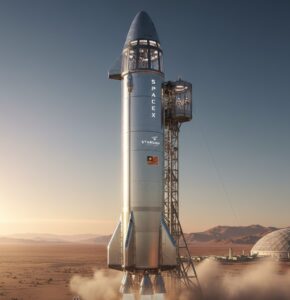
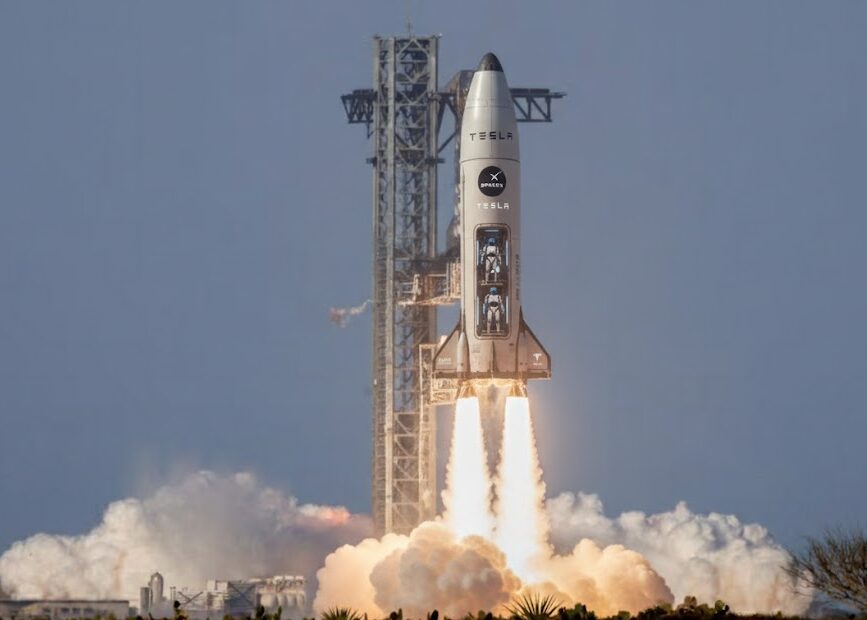
The shuttle at the center of Musk’s 2026 mission is Starship, a completely reusable two-stage rocket framework made of stainless steel and fueled by the Raptor engine.
1. The Structure
Starship comprises of:
- Super Overwhelming booster – the to begin with arrange that lifts the dispatch into orbit
- Starship shuttle – the upper organize that carries cargo, team, or logical payloads
Both stages are being built for fast reuse, a key prerequisite for making Defaces missions reasonable and repeatable.
2. The Control Source: Raptor Engines
Starship employments Raptor motors, rocket engines that run on fluid methane and oxygen (CH₄/LOX). The choice of methane is intentional—it can be delivered on Defaces utilizing climatic CO₂ and subsurface water.
This future capability is known as ISRU (In-Situ Asset Utilization). It implies one day, Starship might refuel on Damages and return domestic, empowering two-way travel for the to begin with time in human history.
3. Capacity and Capability
Starship is anticipated to deliver:
- Up to 150 tons of payload to circle in reusable mode
- A pressurized cabin expansive sufficient for handfuls of passengers
- Advanced life-support and radiation protecting frameworks for future manned missions
- Heavy mechanical gear for early Damages base work
For the 2026 mission, Starship would most likely carry a blend of:
- Research instruments
- Communication systems
- Autonomous rambles or rovers
And conceivably, Musk’s most recent creation—the Tesla Optimus humanoid robot
The Role of Tesla’s Optimus Robot in the 2026 Mission

One of the most attention-grabbing perspectives of Musk’s 2026 plans is the specify of Tesla’s Optimus bot possibly being included on board.
Why would a humanoid robot go to Mars?
1. Mechanical autonomy Are Culminate for Defaces Prep Work
Mars is perilous. Radiation introduction, temperature swings, clean storms, and a lean environment make it unsafe for early human pioneers. A humanoid robot could:
- Build or set up early equipment
- Lay establishments for habitats
- Deploy sun based arrays
- Test neighborhood materials
- Scout landing zones
- Run repair tasks
Optimus is planned for adroit tasks—making it perfect for testing genuine extraterrestrial labor.
2. Musk Needs a Mechanical Workforce
Elon Musk has said more than once that both Soil and Damages will inevitably advantage from a automated labor drive. Optimus represents:
- Safe deployment
- Precision
- Low cost
- Scalability
Sending a Tesla Bot in 2026 seem serve as a confirmation of concept for future missions.
3. A PR and Innovation Showcase
Let’s be legitimate: Musk moreover adores sensational demonstrations.
A Tesla humanoid robot strolling (or indeed standing) on the Martian surface would be one of the most famous minutes in innovation history.
The Mission Goals: What SpaceX Wants to Achieve in 2026
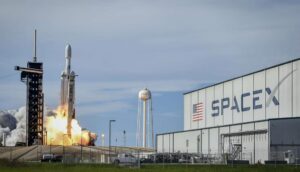
The 2026 mission is not anticipated to be run, but it will play a crucial part in Musk’s guide. Here are the most likely objectives:
1. Approve Interplanetary Flight Systems
The mission would test the vehicle’s capacity to:
- Survive months-long deep-space travel
- Perform long-duration cryogenic fuel storage
- Manage radiation exposure
- Navigate and arrive independently on Mars
Landing Starship on Mars—even unmanned—is a deed no private company has ever attempted.
2. Convey Early Infrastructure
A effective landing seem bring significant early resources, including:
- power systems
- Experiments supporting future ISRU
- Communications equipment
- Materials for building test structures
These to begin with conveyances matter. They speak to the seeds of Musk’s long-term Defaces settlement.
3. Test Landing Locales for Future Manned Missions
SpaceX plans to establish:
- Water-rich zones
- Solar-friendly terrain
- Smooth landing areas
- Locations secure from tidy storms
A 2026 mission would give information that robots and satellites cannot.
4. Assess Tesla Bot’s Capabilities
If included, Optimus might demonstrate:
- Remote-operation systems
- Autonomous errand execution
- Maintenance roles
- Handling Martian soil and tools
This would be historic—the to begin with humanoid robot ever conveyed to another planet.
The Biggest Challenges Ahead
Even as SpaceX makes progress, the 2026 timeline depends on overcoming major engineering, regulatory, and logistical challenges.
1. Achieving Rapid and Reliable Starship Launches
For a Mars mission, SpaceX must:
Launch Starship to orbit regularly
Perform successful booster recoveries
Complete propellant-transfer tests in space
Scale up Raptor engine production
Each step is essential for a long-duration deep-space mission.
2. In-Space Refueling
Mars missions require multiple refueling flights in Earth orbit.
SpaceX must prove it can do:
Cryogenic fluid transfers
Autonomous docking
Long-term propellant storage
This is a high-tech challenge that has never been done at scale.
3. Mars Entry, Descent & Landing
Landing a 100+ ton spacecraft on Mars is extraordinarily difficult.
The atmosphere is too thin to slow a ship using air drag, but too thick to ignore entirely. SpaceX has designed Starship’s “belly-flop maneuver” to handle this—but it remains untested on Mars.
4. Radiation and Environmental Conditions
SpaceX must ensure that robots, instruments, and hardware:
Survive cosmic rays
Withstand extreme cold
Operate through dust storms
Manage long-term power generation
These conditions are far harsher than lunar or Earth orbital environments.
How the 2026 Mission Fits Into Musk’s Long-Term Defaces Vision
Musk’s objective is not essentially to send one shuttle to Mars—it is to make humankind a multiplanetary species. The 2026 mission is portion of a greater guide that includes:
1. Cargo Missions (2026–2030)
These missions bring:
- Equipment
- Materials
- Robots
- Environmental monitors
- Power sources
Before people arrive, Musk needs a working outpost.
2. To begin with Run Missions (Early–Mid 2030s)
Once cargo frameworks are solid, SpaceX needs to dispatch human explorers:
- Scientists
- Engineers
- Builders
- Early settlers
These pioneers will offer assistance develop changeless habitats.
3. A Self-Sustaining City on Defaces (2040s–2050s)
Musk envisions:
- 1 million individuals living on Mars
- A flourishing nearby economy
- Solar and atomic control grids
- Large-scale agriculture
- Martian fabricating industries
The 2026 dispatch is the to begin with genuine step toward turning that dream into reality.
Why This Mission Matters for Humanity
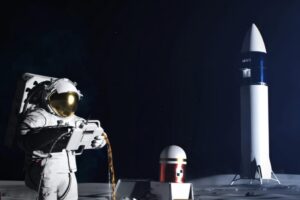
Indeed if Starship doesn’t hit the 2026 dispatch window impeccably, Musk’s Defaces endeavors speak to something strong and uncommon: a private company driving humanity’s following monster leap.
This mission things since it:
- Pushes aviation innovation forward at uncommon speed
- Opens the entryway to interplanetary travel
- Advances mechanical technology and automation
- Inspires worldwide intrigued in space exploration
- Lays the establishment for future eras to live past Earth
And maybe most importantly—it challenges the conviction that settling another planet is a removed dream.
Final Thoughts
Will the Starship Defaces mission certainly happen in 2026?
It’s troublesome to say.
SpaceX is known for moving inconceivably quick, breaking boundaries, and demonstrating skeptics off-base. But interplanetary missions are among the most complex endeavors people have ever attempted.
Here’s what we can say:
- A 2026 dispatch is ambitious
- A dispatch by 2027–2028 is likely
- Starship will reach Mars—it’s fair a matter of when
Whenever the minute comes, it will check a unused chapter in human history. The dispatch of Starship toward Mars—possibly carrying Tesla’s Optimus bot—will symbolize more than one company’s accomplishment. It will speak to a move in human predetermination, from a species bolted to one planet to pioneers coming to over the sun oriented system.
And if SpaceX succeeds, future eras may see back at 2026 as the year the long travel toward humanity’s multiplanetary future genuinely started.