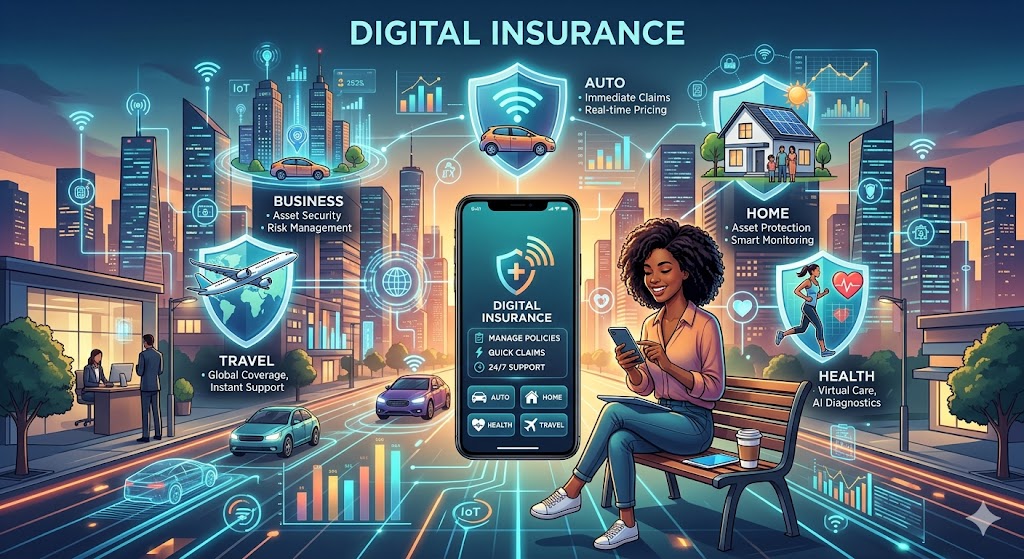
Digital Insurance Platforms in the United States
The insurance industry in the United States is undergoing a major transformation driven by digital technology. Traditional insurance processes that once relied on paperwork, physical offices, and long approval times are being replaced by modern digital insurance platforms. These platforms allow consumers to compare policies, purchase coverage, file claims, and manage their insurance entirely online. As technology continues to evolve, digital insurance platforms are reshaping how Americans access and experience insurance services.
The Rise of Digital Insurance Platforms
Digital insurance platforms have gained popularity in recent years as consumers demand faster, more convenient financial services. With the widespread use of smartphones, cloud computing, and artificial intelligence, insurance companies are now able to deliver seamless digital experiences.
These platforms enable customers to purchase insurance policies within minutes instead of days. By simplifying complex procedures and removing unnecessary paperwork, digital platforms make insurance more accessible and user-friendly. Many insurance companies have also launched mobile apps and online portals that allow customers to manage their policies anytime and anywhere.
Key Technologies Driving Digital Insurance
Several advanced technologies power modern digital insurance platforms:
Artificial Intelligence (AI):
AI helps insurers analyze customer data, assess risks, and provide personalized policy recommendations. AI-powered chatbots also assist customers with inquiries and claims support.
Big Data Analytics:
Insurance companies use large datasets to better understand customer behavior, predict risks, and improve pricing models.
Cloud Computing:
Cloud-based systems allow insurance providers to store and process massive amounts of data while ensuring scalability and security.
Automation:
Automated systems speed up claims processing and underwriting, reducing human errors and improving efficiency.
Benefits for Consumers
Digital insurance platforms offer multiple benefits for customers in the United States:
Convenience: Customers can compare policies, buy coverage, and file claims online without visiting an insurance office.
Faster Claims Processing: Automation and AI help insurers evaluate claims quickly, sometimes approving them within hours.
Personalized Insurance Products: Advanced analytics allow insurers to create customized policies based on individual needs and risk profiles.
Lower Costs: Digital platforms reduce operational expenses for insurance companies, which can lead to more affordable premiums for customers.
Benefits for Insurance Companies
Insurance providers also gain significant advantages from digital transformation. Digital platforms allow insurers to reach a larger audience and improve customer engagement. They also reduce administrative costs by automating routine tasks and improving operational efficiency.
In addition, digital platforms help insurers detect fraud more effectively through data analysis and real-time monitoring systems.
Challenges and Risks
Despite the advantages, digital insurance platforms also present certain challenges. Cybersecurity threats are a major concern because insurance platforms handle sensitive customer information such as personal details, financial data, and medical records.
Another challenge is regulatory compliance. Insurance companies must follow strict state and federal regulations, which can sometimes slow the adoption of new technologies. Building trust among customers who prefer traditional insurance methods is also an ongoing challenge.
The Future of Digital Insurance in the U.S.
The future of digital insurance platforms in the United States looks promising. Emerging technologies such as blockchain, machine learning, and Internet of Things (IoT) devices are expected to further transform the insurance industry. For example, IoT devices in vehicles can enable usage-based auto insurance, while smart home sensors can help insurers monitor risks and prevent damages.
As competition grows and customer expectations continue to evolve, insurance companies will likely invest more in digital platforms to remain competitive.
Conclusion
Digital insurance platforms are revolutionizing the insurance industry in the United States. By leveraging advanced technologies such as artificial intelligence, cloud computing, and data analytics, insurers are providing faster, more efficient, and more personalized services. While challenges such as cybersecurity and regulatory compliance remain, the continued growth of digital innovation suggests that digital insurance platforms will play a central role in the future of insurance. 📊💻